


Diamonds & Diamond Jewelry at Majestic Jewelers
Diamonds have long been a symbol of love, luxury, and sophistication. Whether you’re searching for the perfect engagement ring, a dazzling necklace, or a custom-designed piece, Majestic Jewelers is your premier destination for the finest diamond jewelry. We bring passion, expertise, and a commitment to excellence in every piece we create and offer.
Exquisite Diamond Jewelry Collection
At Majestic Jewelers, we curate an exceptional selection of diamond jewelry, featuring:
- Engagement Rings & Wedding Bands – Timeless designs with expertly cut diamonds to celebrate your love story.
- Diamond Necklaces & Pendants – Stunning statement pieces crafted with precision and elegance.
- Diamond Earrings – From classic studs to dazzling drop earrings, find the perfect sparkle for any occasion.
- Diamond Bracelets & Bangles – Beautifully crafted designs that add brilliance to your wrist.
- Custom Diamond Creations – Bring your vision to life with a unique, one-of-a-kind design tailored to your style.
The Majestic Jewelers Difference
As a trusted name in fine jewelry, Majestic Jewelers is committed to delivering superior quality, value, and service. Here’s why customers choose us for their diamond jewelry needs:
Whether you’re shopping for a special occasion or designing a custom piece, Majestic Jewelers is here to help. Visit our showroom or contact us to explore our exquisite collection and experience the brilliance of diamonds like never before.
- Exceptional Quality & Certified Diamonds: We source only the finest diamonds, ensuring each stone meets our high standards of cut, clarity, color, and carat weight. Our diamonds are ethically sourced and certified for authenticity.
- Expert Craftsmanship: Our master jewelers combine artistry with precision to create breathtaking diamond jewelry that lasts a lifetime.
- Custom Design Services: Have a unique idea in mind? Our custom jewelry experts will work with you to design and craft a personalized diamond piece that reflects your individuality.
- Competitive Pricing & Value: We believe luxury should be accessible. By offering competitive pricing without compromising quality, we ensure you get the best value for your investment.
- Trusted Reputation & Customer Satisfaction: With years of experience and countless happy customers, Majestic Jewelers has built a reputation for excellence, trust, and integrity.
Learn about diamonds
The diamond color evaluation of most gem-quality diamonds is based on the absence of color. A chemically pure and structurally perfect diamond has no hue, like a drop of pure water, and consequently, a higher value. GIA’s D-to-Z diamond color-grading system measures the degree of colorlessness by comparing a stone under controlled lighting and precise viewing conditions to masterstones and stones of established color value.
GIA’s diamond D-to-Z color-grading scale is the industry’s most widely accepted grading system. The scale begins with the letter D, representing colorless, and continues, with increasing presence of color, to the letter Z.
Many of these color distinctions are so subtle that they are invisible to the untrained eye; however, these distinctions make a very big difference in diamond quality and price.
- Why does the GIA color grading system start at D?Before GIA universalized the D-to-Z Color Grading Scale, a variety of other systems were used loosely, from A, B, and C (used without clear definition), to Arabic (0, 1, 2, 3) and Roman (I, II, III) numbers, to descriptive terms like “gem blue” or “blue white,” which are notorious for misinterpretation. So the creators of the GIA Color Scale wanted to start fresh, without any association with earlier systems. Thus the GIA scale starts at the letter D. Very few people still cling to other grading systems, and no other system has the clarity and universal acceptance of the GIA scale.
- Are Zs considered fancy-color?No. Naturally colored diamonds outside the normal color range are called fancy-color diamonds. The FTC provides no guidelines for the use of the term “fancy-color” in the US, but there is general agreement in the international trade that fancy-color diamonds are either yellow or brown diamonds that have more color than a Z masterstone or they exhibit a color other than yellow or brown.
Evaluating diamond clarity involves determining the number, size, relief, nature, and position of these characteristics, as well as how these affect the overall appearance of the stone. While no diamond is perfectly pure, the closer it comes, the higher its value.
The GIA Diamond Clarity Scale has 6 categories, some of which are divided, for a total of 11 specific grades.
- Flawless (FL) No inclusions and no blemishes visible under 10x magnification
- Internally Flawless (IF) No inclusions visible under 10x magnification
- Very, Very Slightly Included (VVS1 and VVS2) Inclusions so slight they are difficult for a skilled grader to see under 10x magnification
- Very Slightly Included (VS1 and VS2) Inclusions are observed with effort under 10x magnification, but can be characterized as minor
- Slightly Included (SI1 and SI2) Inclusions are noticeable under 10x magnification
- Included (I1, I2, and I3) Inclusions are obvious under 10x magnification which may affect transparency and brilliance
Many inclusions and blemishes are too tiny to be seen by anyone other than a trained diamond grader. To the naked eye, a VS1 and an SI2 diamond may look exactly the same, but these diamonds are quite different in terms of overall quality. This is why expert and accurate assessment of diamond clarity is extremely important.
- How did the GIA Clarity Scale come to be?Like the color scale, GIA’s clarity grading system developed because jewelers were using terms that could be misinterpreted, “loupe clean” or “piqué™.” Today, even if you buy a diamond somewhere else in the world, the jeweler will most likely use terms like VVS1 or SI2, even if his or her language is French or Japanese instead of English.
- What causes inclusions?Small crystals can become trapped in a diamond when it’s forming. Sometimes as a crystal grows it can develop irregularities in its atomic structure.
Diamonds are renowned for their ability to transmit light and sparkle so intensely. We often think of a diamond’s cut as shape (round, emerald, pear), but a diamond’s cut grade is really about how well a diamond’s facets interact with light.
Precise artistry and workmanship are required to fashion a stone so its proportions, symmetry, and polish deliver the magnificent return of light only possible in a diamond.
A diamond’s cut is crucial to the stone’s final beauty and value. And of all the diamond 4Cs, it is the most complex and technically difficult to analyze.
To determine the cut grade of the standard round brilliant diamond – the shape that dominates the majority of diamond jewelry – GIA calculates the proportions of those facets that influence the diamond’s face-up appearance. These proportions allow GIA to evaluate how successfully a diamond interacts with light to create desirable visual effects such as:
Brightness: Internal and external white light reflected from a diamond
Fire: The scattering of white light into all the colors of the rainbow
Scintillation: The amount of sparkle a diamond produces, and the pattern of light and dark areas caused by reflections within the diamond
GIA’s diamond cut grade also takes into account the design and craftsmanship of the diamond, including its weight relative to its diameter, its girdle thickness (which affects its durability), the symmetry of its facet arrangement, and the quality of polish on those facets.
The GIA Diamond Cut Scale for standard round brilliant diamonds in the D-to-Z diamond color range contains 5 grades ranging from Excellent to Poor.
- How does pavilion depth affect a diamond’s cut?The distance from the bottom of the girdle to the culet is the pavilion depth. A pavilion depth that’s too shallow or too deep will allow light to escape from the side of the stone or leak out of the bottom. A well-cut diamond will direct more light through the crown.
Each carat can be subdivided into 100 ‘points.’ This allows very precise measurements to the hundredth decimal place. A jeweler may describe the weight of a diamond below one carat by its ‘points’ alone. For instance, the jeweler may refer to a diamond that weighs 0.25 carats as a ‘twenty-five pointer.’ Diamond weights greater than one carat are expressed in carats and decimals. A 1.08 carat stone would be described as ‘one point oh eight carats.’
All else being equal, diamond price increases with diamond carat weight, because larger diamonds are more rare and more desirable. But two diamonds of equal carat weight can have very different values (and prices) depending on three other factors of the diamond 4Cs: Clarity, Color, and Cut.
It’s important to remember that a diamond’s value is determined using all of the 4Cs, not just carat weight.
- How did the carat system start?The modern carat system started with the carob seed. Early gem traders used the small, uniform seeds as counterweights in their balance scales. The carat is the same gram weight in every corner of the world.
- What are “magic sizes”?Some weights are considered “magic sizes” – half carat, three-quarter carat, and carat. Visually, there’s little difference between a 0.99 carat diamond and one that weighs a full carat. But the price differences between the two can be significant.
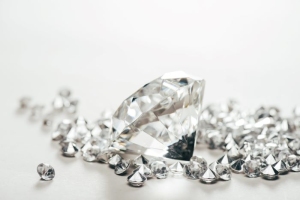
Need information about diamonds?
Get an appraisal, request a quote, buy or sell your diamonds to Majestic & more. Give us a shout!